If you’re in search of a really traditional Christmas experience and something a little different, head to the Weald & Downland Living Museum near Chichester. It is dog and child friendly, educational and bursting with Christmas spirit. Recently, Sussex Exclusive set off in search of a Tudor Christmas at the Weald & Downland Living Museum to see how different it would have been from the experiences we enjoy today.

The Museum
If you’ve never visited before, the Weald & Downland Living Museum covers a site of some 40 acres 7 miles from Chichester and includes a collection of 50 historic buildings dating from 950AD to the 19th century, re-erected from their original sites in south east England.

The museum holds a year round programme of events and exhibitions including immersive demonstrations so you can experience life as it would have been in different eras.

There is lots going on at this time of year and amongst other things, you can learn how to make 17th century mince pies, see demonstrations of Advent cooking in the late 19th century and learn about natural dyes, making ink and letter work, and preparing for winter. But we wanted to know what life was like at Christmas in the mid 16th century.
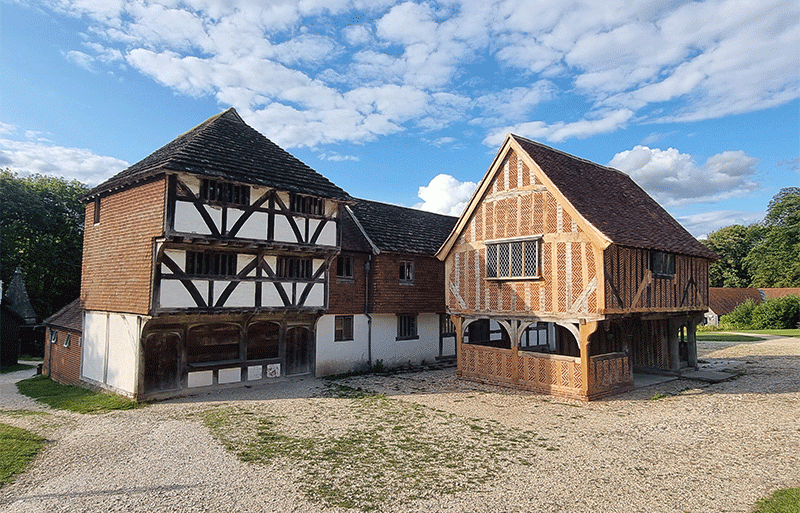
A Tudor Christmas at the Weald & Downland Living Museum
Bayleaf Farmstead and Winkurst Kitchen (buildings number 47 and 48 on the map you can get at the reception desk) are both from the Tudor period (1485 to 1603).

Having visited Bayleaf Farmstead and decided the beds didn’t look that cosy and the WC facilities looked positively draughty, we dived into the kitchen to meet the Yeoman Farmer as he prepared for Christmas.

We were met in a darkish room with the warm glow of a fire but also the robust smoke of a working kitchen of yesteryear with a lot going on. A kitchen in Tudor times was for salting, baking, brewing, washing, slaughtering, smoking and cooking. Spread before us was an array of pots and pans, dried herbs hanging in a corner, and salted meats hung by the fire.

There were barrels of beer and ale, delicately decorated pies, sweet marchpane (a type of marzipan) shaped into holly and ivy, eggs, butter, vegetables and a half melted candle.

The ritual of the year
Our Yeoman explained that in Tudor times preparations for winter would begin in the autumn with the preserving of fruits and vegetables. By November it was Blood Month, a time when animals were slaughtered and the meat treated with salt to preserve it. Mainly lamb and pig (the cows and chickens were too useful), salted meat hung by the fire could last well through the winter.

Advent abstinence
Advent begins on the fourth Sunday before Christmas, and unlike today, in Tudor times, it was a period when you abstained from “everything”. That didn’t mean you starved but you ate humbly, preserving the food you had for Christmas. This was as much about survival as it was about religious sentiment because you had to stretch your winter supplies out for as long as you could.

Christmas Day
Following Christmas Eve mass, you’d be up early for the Christmas Day mass and then you might decorate your house with holly and ivy. These were the main available evergreens of the day as there were few firs in the country back then and not the tradition of the Christmas tree. With mass over and the house looking festive, you could look forward to a great meal that might include roast beef, pies, sweet and savoury tarts and potage, followed by the brightly coloured marchpane.

The Twelve Days of Christmas
The Twelve Days from Christmas Day until the 5th January were all about rest. You weren’t supposed to work and you might hang ivy over the spinning wheel to symbolise that it stood still. You didn’t take down your decorations on Twelve Night like you do now and these stayed up until Candlemas at the beginning of February. But you might have enjoyed a Twelfth Night cake, also know as a Lord of Misrule cake. This was a fruit cake in which was hidden a bean or pea and the person who found it became “king” or “queen” for the rest of the night.

The Tudor Christmas at the Weald & Downland Living Museum makes it easy to romanticise about the past and it’s important to keep in mind the hardship of the day. Driving home, I tried to picture our Yeoman walking to Chichester on market day in the rain, weighed down with the produce he must sell in order to buy that all-important salt for the meat and things he can’t grow to survive. But at the same time, exploring the winter rituals of preserving and preparing, resting and feasting, you can’t help but yearn for simpler times.
Christmas at Weald and Downland Living Museum
You can learn about how they prepared for winter and Christmas during Tudor times but you might also enjoy the Weald & Downland tree dressing event on the 1st December and wassailing on the 19th January.


