
Now divided into West Sussex and East Sussex, the historic county of Sussex is rich in heritage, culture, stunning views, great houses, fascinating towns, vast landscapes and wonderful places to explore. In fact, you could spend a lifetime here and probably not discover it all. But if you visit all or indeed most of our best places to visit in Sussex, you’ll start to get an idea of what an incredible county Sussex really is!
The South Downs
There is perhaps no more iconic landmark in Sussex than the South Downs, a chalky ridge of hills and escarpments that cover 670 km square. Running from Eastbourne in East Sussex, right through West Sussex and on to Winchester in Hampshire, they are the place of many legends and stories and have played their part in the life of Neolithic man, the Romans, the Norman Conquest, the defeat of the Spanish Armada, pirates, smugglers, World War II defences and more.
The South Downs Way is one of only 15 national trails in England and Wales. It’s 160 km long (100 miles) and runs through the South Downs. It was recently named “10th Most Beautiful Hiking Trail in the World” by outdoors specialist Zalando. Notable places en route are many and include Harting Down, Amberley, Bramber, Cissbury and Chanctonbury Rings, Devil’s Dyke, the Jack and Jill windmills, Wilmington, the Seven Sisters and Beachy Head.
Above all else though, the South Downs and its many footpaths are breathtakingly beautiful and evocative, with incredible views north across the Weald and beyond, and south out to sea. Whilst some stretches may be busier than others, you’ll often find yourself alone, listening to the call of the wind, following in footsteps that date back thousands of years, and sheltering in the shade of trees that are bent double into the wind.

Sussex vineyards
Sussex is fast gaining a reputation for producing superb wine and you’ll find vineyards aplenty from east to west. That means you really cannot leave Sussex without visiting at least one, and in order to really do our wine justice, you should probably visit half a dozen. To be honest, it’s hard to cherry-pick the best of the bunch (excuse the pun) because they nearly all have something great to offer, but working our way from east to west, here are some suggestions:
- The Rathfinny Estate near Polegate and Eastbourne was established in 2010. Their three principal grape varieties are Pinot Noir, Chardonnay and Pinot Meunier as well as a small amount of Pinot Gris and they are known for their world-class sparkling wines. More importantly, they have a Tasting Room Restaurant and also offer vineyard picnics, summer tours and cellar visits.
- At the other end of the county, near Chichester, Tinwood Estate was established in 2006 and is another local producer fast gaining a reputation for producing outstanding sparkling wines. They also do harvest experiences and have a tasting room as well as luxury lodges within the estate if you want to stay.
- Finally, in more central Mid Sussex and right on the edge of Ashdown Forest, there is Bluebell Vineyard Estate where they are producing world-class still and sparkling wines and growing Chardonnay, Pinot Noir, and Pinot Meunier vines along with Seyval Blanc, Bacchus, Ortega, Chasselas and Merlot.
Why not have a look at our vineyard trail suggestions for more information: Central Sussex Wine TourWest Sussex Wine Tour

Sussex castles
If it’s castles you’re after, then you are in luck because Sussex is home to plenty! In East Sussex, you’ll find Rye Castle (Ypres Tower), Camber Castle, Hastings Castle, Bodiam Castle, Herstmonceux, Lewes Castle and Pevensey Castle. These range from Medieval to Elizabethan.
When you have finished exploring in East Sussex, head to West Sussex and discover Bramber Castle, Knepp Castle, Amberely Castle, Arundel Castle and Midhurst Castle.
Visiting the many castles is a great way to learn more about the history of Sussex and how it evolved.

Sussex National Trust properties
There are a number of National Trust properties in Sussex and the National Trust also owns lots of country spaces.
Pack your National Trust card and make your way to Bodiam Castle near Robertsbridge, Lamb House in Rye, Bateman’s in Burwash and the Alfriston Clergy House. Then make time for Sheffield Park and Gardens, Monk’s House in Rodmell all of which are in East Sussex. Birling Gap, Ditchling Beacon and Saddlescombe Farm are all also National Trust sites.
Then move West and explore Standen, Nyman’s, Petworth House, Woolbedding and Uppark and enjoy a walk at Slindon Estate and Cissbury Ring.

Sussex follies
Looking for something a little quirky? Look no further because there are plenty of follies to discover in Sussex. In East Sussex, the most famous follies are the famous “Mad Jack” follies which include the Sugar Loaf, the Pyramid and Tower, the Observatory and the Needle. In West Sussex, you’ll find Nore Folly at Slindon, Hiorne Tower at Arundel, the very haunted Racton Monument and the enigmatic Vandalian Tower.

Sussex beaches
Who doesn’t love a day at the seaside and Sussex has 225 km of coast. By the end of 2024, the King Charles III Coastal Path should be complete which means for keen walkers you will be able to walk the full length of the county along the coast.
But for beachgoers, there are 50 Sussex beaches (27 beaches in West Sussex and 23 in East Sussex) to choose from many of which are made up of a mixture of pebble, shingle and sand. In 2023, Sussex had three award-winning Blue Flag beaches namely Hove Lawns, Marina St Leonards, and West Wittering as well as award-winning beaches at Bognor Regis, Littlehampton, Worthing, Saltdean, Brighton and Pelham Beach in Hastings.

Sussex cities
Sussex has just two cities and they are very different. In West Sussex, you’ll find the cathedral city of Chichester. Chichester has a long past and was a Roman and Anglo-Saxon settlement. There are plenty of things to do in and around this historic city, and it’s also not far from Chichester Harbour with its inlets, nature reserves and coastal walks.
In East Sussex, the eclectic and cosmopolitan city of Brighton and Hove is a major attraction with its well-known pier, exotic Regency palace, aquarium, lively nightlife, North Lane district and beaches. Both cities are a great place for a mini break.

Sussex English Heritage sites
Sussex has a number of outstanding English Heritage Sites, perhaps the most famous of which is Battle Abbey and Battlefield. It’s the very place where the Normans defeated the Saxons at the Battle of Hastings in 1066. You can explore the battlefield with its selection of sculptures getting ready to fight, and then circuit the main buildings, explore some of the cellars and head to the Abbey rooms which include the magnificent dormitory.
Other worthy Sussex English Heritage sites include Boxgrove Priory near Chichester, Bramber Castle, Pevensey Castle and Camber Castle.

Historic Sussex towns
If you love nothing more than a good meander around a historic town then you are going to love Sussex because from west to east, historic towns will pepper your route. It’s difficult to list them all but the most popular include Midhurst, Petworth, Arundel, Horsham, East Grinstead, Lewes, Rye, Hastings Old Town, Bexhill, Uckfield and Battle.

Sussex ruins
Sussex is home to some evocative ruins. The most famous perhaps have to be Cowdray Ruins (said to be haunted) – an Elizabethan mansion at Midhurst, Tide Mills, a ruined village near Newhaven, Lewes Priory, Bedham church (near Petworth), various ruins in Winchelsea and the evocative ruins at Nymans. A number of the Sussex castles are also in ruins but still well worth exploring.

Sussex canals, harbours, ports and waterways
Travelling by water is a pleasure in its own right and Sussex is blessed with a number of canals, waterways, ports and harbours. A boat trip on the Wey and Arun Canal is a delicious way to explore. In 1970 a group of volunteers set about restoring the canal and nowadays you can enjoy boat trips along a fabulously sleepy and picturesque section just south of Loxwood.
One of the most picturesque Sussex villages has to be Bosham in West Sussex just west of Chichester. It’s a photographer’s dream, wrapped as it is around a little harbour with the water at high tide washing the feet of the quayside houses.
For harbour life, in East Sussex, make your way to Rye Harbour or the Port of Newhaven and in West Sussex, discover Chichester and Pagham Harbours and Shoreham Port. Alternatively, head to Bodiam for boat hire and river cruises or to Barcombe Mills near Lewes for leisurely boating. And don’t forget the marinas at Brighton, Chichester, Eastbourne, Newhaven, Bordham Pool (Bognor), Shoreham and Littlehampton.

Sussex art galleries and museums
Almost every Sussex town has its own museum and there are plenty of art galleries in the county. However, there are a few big guns that you shouldn’t miss. These include Hastings Contemporary, Towner Art Gallery (Eastbourne), the De La Warr Pavillion in Bexhill, Brighton and Hove Museum, Pallant House in Chichester, Charleston near Lewes, Petworth House, the Royal Pavilion in Brighton and Rye Art Gallery.

Sussex heritage railways
If you’re lucky, from various strategic points in mid-Sussex, you can occasionally hear the whistle and cheer of a steam train pulling its way along the historic Bluebell Railway … the oldest preserved, standard gauge railway in the country.
The Bluebell Railway is managed by the Bluebell Railway Preservation Society (all volunteers) and includes 11 miles of heritage railway line which runs right through the heart of the Sussex countryside. The trains include the classic Pullman from the 1920s and trains run between Sheffield Park and East Grinstead with stops at Horsted Keynes and Kingscote.
Kent & East Sussex Railway near Northiam is another heritage line which runs between Tenterden and Bodiam as is the Lavender Line, a heritage railway based at the restored Victorian station of Isfield near Lewes in East Sussex.

Luxury Sussex hotels and spas
If you want to visit Sussex for a little luxury and wellbeing, you will not be disappointed. Sussex is home to some prestigious and downright lovely hotels and spas and these include The Grand in Eastbourne and Ashdown Park Hotel, The Grand in Brighton, Alexander House near Turners Hill, Ockenden Manor in Cuckfield, Bailiffscourt at Climping, South Lodge at Horsham, Gravetye Manor near East Grinstead, Goodwood Hotel near Chichester and Amberley Castle.

Sussex gardens
The fabulous Sussex climate and the county’s rich cultural past are just two of the reasons that Sussex is home to so many amazing gardens. If you want to see wallabies, and who doesn’t, then head to Leonardslee Lakes and Gardens just outside Horsham. The woodland gardens cover 240 acres and include valleys, lakes, a rock garden and of course, the wallabies! The grounds are also currently home to Anton Smit’s stunning sculpture exhibition entitled “The Walk of Life” and you’ll find his thought-provoking pieces throughout the grounds. Wakehurst near Haywards Heath is part of Kew and you might want to combine a visit there with a trip to Borde Hill, also near Haywards Heath and Nymans at Handcross.
But don’t stop there! Make your way to the stunning Sussex Prairie Gardens near Henfield and then on to Denmans Gardens near Bognor Regis. Parham House near Storrington is another must-visit Elizabeth garden and the Tulip Festival at Arundel is quite something! Then turn east, to Great Dixter near Rye and Pashley Manor Gardens near Ticehurst before heading back to Lewes and the gardens at Charleston.

Historic Sussex houses
It will come as no surprise that with such a long and varied past, that Sussex has some glorious historic houses to explore. The Elizabethan mansion Parham House dates back to the late 17th century and has a stunning Great Hall and Parlour, along with lots of other rooms to explore. St Mary’s House in Bramber has the most extraordinary history that dates back to the Knights Templar! Great Dixter near Rye is another fascinating building with a curious past and Anne of Cleves House in Lewes … well it says what it does on the tin!
Firle Place near Lewes is Georgian and although it’s a private house, it is occasionally open to the public, as is Wiston near Steyning. And Charleston House near Lewes is all about the Bloomsbury Set!

Sussex piers
Piers are an iconic part of seaside culture and Sussex is blessed with five and a half. Bognor Regis, Worthing, Brighton, Eastbourne and Hastings all have piers and Worthing Pier has won Pier of the Year twice! The half pier is Brigthon’s West Pier which is pretty much derelict now but great for some moody photos!

Sussex windmills
Sussex was once dotted with working windmills of all descriptions. There are still quite a few left some of which you can visit (and enter) and some of which are still working. You’ll find some of the best-known Sussex windmills include Jack and Jill at Clayton, Rottingdean, Challey, Mayfield, Shipley, High Salvington, Ashcombe, Nutley, Patcham, Polegate and Halnaker.

Sussex sculpture trails
Sussex has always been home to a diverse selection of creatives and the result is, that the county is blessed with sculpture trails of all descriptions. One of the county’s most renowned sculptors is Philip Jackson whose studio can be found in Cocking near Midhurst. In the summer, his garden opens to the public to reveal his utterly unique sculptures. Leonardslee near Horsham is another big gun when it comes to sculpture and they have works by Anton Smit on display throughout the grounds all year. They also host the annual Surrey Sculpture Society trail every summer. For something totally different, head over to Pevensey and follow the 1066 Country Walk which is dotted with a sequence of wooden sculptures along its route. Or if you walk the Serpent Trail to the west, there are seven sculptures to discover along the way.

Nature reserves and parks
The good news is that there is lots and lots of open space in Sussex in the shape of nature reserves and parks, so you’re never far away from somewhere to enjoy the great outdoors. The Sussex Wildlife Trust manage about 28 reserves right across the county from Rye Harbour and Filsham Reedbed near Hastings to Iping and Stedham Commons and Leythorne Meadow near Chichester. But there are dozens if not hundreds more nature reserves as well many Sites of Special Scientific Interest and country parks such as Seven Sisters Country Park, Hastings Country Park, Stamner Park and Ashdown Forest.

Brighton i360
The Brighton i360 is a 162-metre tall moving observation tower right on Brighton seafront which opened in 2016. You can hop in the pod and as it climbs, views of Brighton, the sea, the South Downs and beyond are slowly revealed. You can also take part in lots of different experiences including yoga in the sky, gin tasting and even abseiling! And it’s become one of the county’s most iconic attractions.

Sussex zoos and petting farms
Let us not forget the little ones! Drusillas near Polegate in East Sussex is a fantastic local zoo but there are also aquariums in Brighton, Hastings and Eastbourne. For farms and small animals, make your way to Fishers Farm near Billingshurst, Tilgate Park near Crawley, Knockhatch Adventure Park near Hailsham or Middle Farm near Lewes.

Sussex Roman palaces
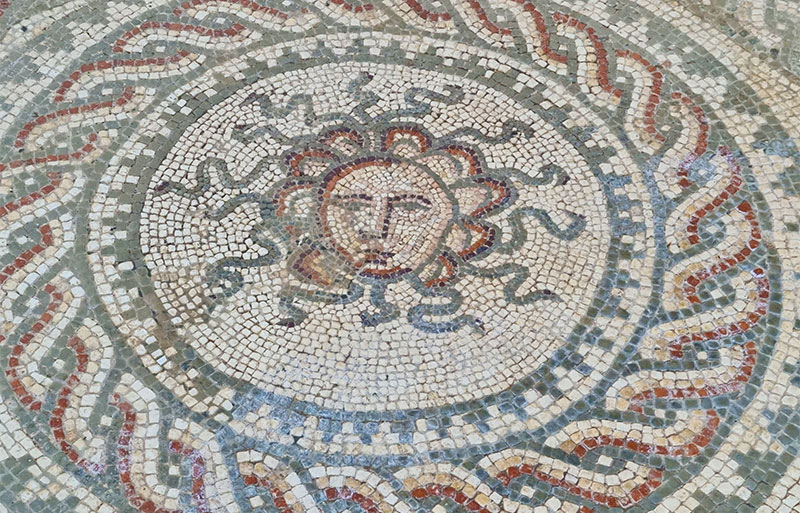
The Romans left a big footprint in Sussex and you will never go far in the county without stumbling upon a reference to them. There are two notable Roman palaces that you can visit namely Fishbourne Roman Palace near Chichester and Bignor Roman Villa near Pulborough. You can also travel the Roman road of Stane Street and visit Pevensey Castle which belonged to the Romans long before the Normans arrived.
Thorney Island
Not quite an island because it is now joined to the mainland by a strip of land, this nature reserve is owned by the Ministry of Defence and is an unusual and slightly off the beaten track place for a visit. A walk around Thorney Island is about 12 km long but you have to stick to the path as well as pass through a security gate to get on to the island. Once there, there is little to do apart from admire the incredible wildlife and amazing views all around from Chichester Harbour to Hayling Island and, of course, out to sea.
As with so much of our Sussex countryside, it has an interesting history. It’s home to one of the oldest Saxon churches in Sussex whilst in 1933 a plane crash alerted the Ministry of Defence to its suitability as a strategic defence and the original islanders were moved off. In the 1970s, it was used as a refuge for the “Vietnamese Boat People”. But most of all, any visit to the island is a reminder as to what a wild and inhospitable place it must have been back in the mists of time when it was an island and people were trying to live and survive there.

Rampion Offshore Wind Farm
You may not automatically think of a wind farm as somewhere special to visit but Rampion is both environmentally important and pretty unique. As the south coast’s first wind farm, it has 116 turbines on a 70 km square site and is between 13 and 20 km off the Sussex coast. On a clear day, you can see it from the South Downs anywhere from Worthing to further east of Brighton – although too far away to get a good photo, and always slightly mysterious on the horizon. Generating power equivalent to that needed by about 350,000 homes, there is also an on-shore visitor centre.
But why stop at views from the shore and the visitor centre? You can now actually get out on the water and visit the farm itself with Sussex Boat Trips who will take you in amongst the turbines. Because the area is no longer fished, it is teeming with marine life and there is something simply awe-inspiring about looking up at the towering turbines as they do their slow and majestic dance.
Choosing the Best Places to visit in Sussex wasn’t easy. The truth is, we have hundreds of amazing places which are all worth a visit from the large and impressive to the small and intricate. So if your favourite place in Sussex isn’t on our list, please let us know and perhaps we’ll add it!
If you have enjoyed this post about the best places to visit in Sussex, you may be interested in:
The 20 Best Places to Live in Sussex
The Best Autumn Walks in Sussex


