Sussex, in the south-east of England, is approximately 3,783 square kilometres. It is 120 km long and between 35 and 40 km wide. It is home to hundreds of towns and villages, many of which date back hundreds of years. It is great fun to explore and to give you a helping hand, here is our A to Z of Sussex. You can also find our A to Z of Sussex landmarks here: Sussex landmarks.

Arundel
Arundel in West Sussex is a historic market town on the banks of the river Arun. It has a Medieval castle and a Gothic cathedral and is just south of the South Downs.

Amberley
Amberley is a village in West Sussex with Amberley Museum and Amberley Castle, as well as direct access to the South Downs and a riverside tea room.

Ardingly
Ardingly is in the Mid Sussex district of West Sussex and is home to Ardingly College, the South of England Showground, Wakehurst and a large reservoir.

Alfriston
Known as one of the prettiest villages in England, and with a past that includes plenty of tales of smugglers, Alfriston is in East Sussex and is home to Medieval buildings, a red lion and even a WWII bomb.

Ashdown Forest
Ashdown Forest is not a village or town, but it is a significant part of East Sussex. The forest is made up of ancient heathlands, forests and waterfalls, with views of the South Downs and the occasional sighting of Winnie the Pooh.

Bexhill on Sea
Bexhill on Sea in East Sussex is famous for its Art Deco De La Warr Pavilion and seafront Colonnade but actually, the town dates back to at least 772 AD. It’s been home to a diverse selection of residents including a Maharaja and Suzy Izzard, formerly known as Eddie Izzard.

Bognor Regis
You might know Bognor Regis in West Sussex for its Butlin’s holiday camp. However, the town was developed in the late 18th century as a fashionable seaside resort and actually dates back to Anglo Saxon times. It has a long stretch of beach, a pier and a promenade for cycling and walking.

Bignor
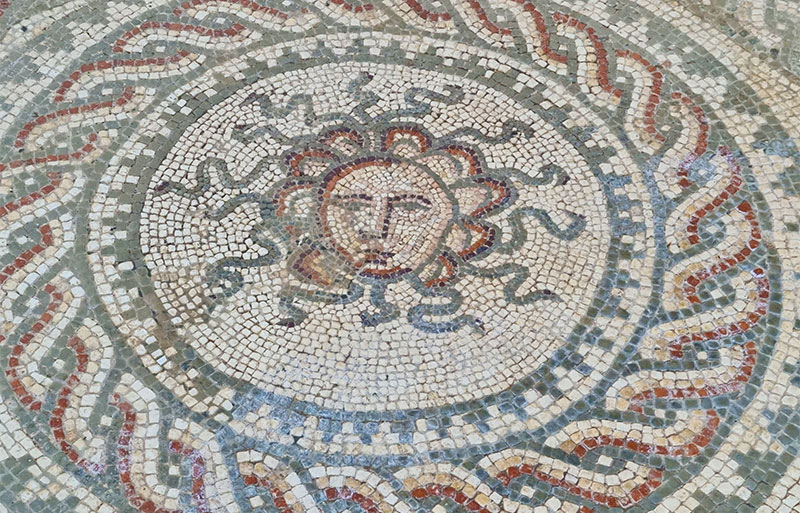
Tiny Bignor is a village in West Sussex with a big past. A farmer discovered the remains of a Roman villa here in 1811 which is now known to be one of the most complete and intricate in the country. Apart from the villa, Bignor is also home to vineyards and is right at the foot of the Downs.
Billingshurst
Billingshurst in West Sussex dates back to about 800 AD and its name is believed to have Anglo Saxon origins. It sits on the route of the old Roman road, Stane Street. Today it is a bustling and busy village with a number of independent shops and cafés.

Bosham
Beautiful Bosham in Chichester Harbour in West Sussex has links to the Romans, the Saxons and King Harold – the last Saxon king before the Norman invasion. It’s also thought that King Canute may have lived here. Today, perched on the edge of Bosham Channel, the village is hopelessly pretty and a great place to escape.

Brighton
Brighton in East Sussex is the larger of our two Sussex cities and is perhaps the beating, bohemian heart of the county. Developed quite recently in the Georgian and Regency eras from a small fishing village to a fashionable seaside resort, it is now known for its creativity, the Royal Pavilion and it’s dynamic LGBT community.

Bramber
Small but important, Bramber in West Sussex has the remains of a Norman castle once owned by the de Braose family, and St Mary’s House which reveals tales of the Knights Templar, Queen Elizabeth I and King Charles II.

Burwash
Burwash in East Sussex is most famed for being the home of Rudyard Kipling who lived at nearby Bateman’s, and you’ll find a statue of the author in the High Street. Burwash itself dates back to the 13th century when it had a busy market, and in later years became a hot spot for smugglers.

Battle
Battle in East Sussex is perhaps the epicentre of Sussex history as it is the place where allegedly the Battle of Hastings took place in 1066. Battle Abbey remains an impressive building that dominates the town.

Chichester
Chichester in West Sussex is the smaller of our two Sussex cities. It sits on the edge of Chichester Harbour and has a Roman wall, a Medieval cathedral and a photogenic central Market Cross. It’s home to lots of independent shops, cafés and restaurants and is a great place to explore.

Chichester Harbour
Chichester Harbour in West Sussex is a natural harbour that is designated as an Area of Outstanding Natural Beauty and a biological and geological Site of Special Scientific Interest. It covers an area of 3,733.5-hectare (9,226-acre), and includes a number of channels, inlets, and peninsulas.

Camber
On the eastern edge of East Sussex, Camber is a village that is perhaps best known for the Camber Sands, the only sand dune system in East Sussex, stretching from the River Rother at Rye Bay to the Kent border (4.8 km).

Crowborough
Crowborough in East Sussex overlooks Ashdown Forest. It is the largest and highest inland town in East Sussex and its most famous resident was Sir Arthur Conan Doyle, creator of Sherlock Holmes. There is a statue of him in the centre of town.

Cowdray Estate
The Cowdray Estate is a 16,500 acre private family estate in and around Midhurst, West Sussex. It includes the famous Tudor Cowdray ruins, a polo ground, a golf club, farm shop and house. The estate properties are distinctive with their bright yellow woodwork and the estate is owned by Viscount Cowdray.

Cuckfield
Cuckfield in the Mid Sussex district of West Sussex is a pretty village that dates back to at least the 13th century and over the years it was been an important staging post on the road from London to Brighton and is the place where one of the first recorded dinosaur fossils was found. It has its own museum and is also known for the Independent State of Cuckfield, declared in 1966.

Crawley
Crawley is known for being a new town in West Sussex developed after WWII but it also has a history that dates back to the Stone Age and Medieval times.

Climping
Climping in West Sussex, is perhaps best known for its beach which is an undeveloped, 32.1-hectare (79-acre) Site of Special Scientific Interest, with the eastern half a designated Local Nature Reserve.

Ditchling
Ditchling in East Sussex is just north of Brighton and is within the South Downs National Park. It dates back thousands of years but developed in the Saxon period when it was held by Alfred the Great. Other notable connections include William de Warenne, Edward the Confessor, The Guild of St Joseph and St Dominic and Dame Vera Lynn. It also now has a number of well known vineyards, like Ridgeview.

Dallington
Dallington is a little village in East Sussex, which is perhaps most famous for the Sugar Loaf folly built by Jack Fuller.

Downs Link
The Downs Link is a long distance footpath and cycle trail along a disused railway line from the North Downs to Shoreham. Mainly flat, it is 59 km in West Sussex.

East Grinstead
Historic East Grinstead is just within West Sussex and on the northern border of the county. The High Street contains one of the longest continuous rows of 14th-century timber-framed buildings in England. The town is also on the Meridian Line and famous for its specialist burns department and the resulting Guinea Pig Club.

Eastbourne
The seaside town of Eastbourne in East Sussex was developed in the 18th and 19th century although the town dates back much further than that. It has a pier, some fabulous architecture, two Martello towers, and a marina. It also marks the start of the South Downs and the South Downs Way and has a reputation for being one of the sunniest towns in the country. Just outside the town is the famous Beachy Head with its magnificent cliffs and striking lighthouse.

Exceat
Exceat was a bustling East Sussex fishing village which was wiped out by the plague. These days it is marked by a bridge at Cuckmere Haven and a stone marker in the fields as you climb the South Downs at Seven Sisters.

Ferring
Ferring in West Sussex is a coastal village with a fabulous beach. The village gets a mention in the Domesday Book and it has a Norman church.

Forest Row
Forest Row in East Sussex is an eclectic town on the edge of Ashdown Forest. It was on a turnpike road in the 18th century and has a number of Medieval buildings. These days it has quite a bohemian feel in part due to the nearby Michael Hall School and the fact that it is close to the Meridian Line.

Friston
Friston in East Sussex is a little village between Eastbourne and Seaford. It has a notably old church and links to Eric Morecambe of Morecambe and Wise. Friston is also on the edge of Friston Forest, a large and recently established forest with lots of footpaths and cycle routes.

Fittleworth
Fittleworth is just outside Petworth in West Sussex and dates back to at least the 12th century.

Goodwood
Goodwood is an 11,000 acre private estate near Chichester, West Sussex, owned by the Duke of Richmond. It has a variety of facilities and hosts a number of events. These include the Goodwood Festival of Speed, set around their circuit and a true motoring extravaganza, Goodwood Revival, Goodwoof and the Qatar Festival. There is also a hotel, golf course, aerodrome and their prestigious Kennels restaurant.

Glynde
Glynde is a small village south of Lewes in East Sussex and is also home to Glynde Place, an Elizabethan House and home of Viscount Hampden. The Glynde Estate covers nearly 9,000 acres. The house is occasionally open to the public. It’s also home to Glyndebourne, a famous opera house.

Heathfield
Heathfield is a market town in East Sussex and a good central point from which to explore the rest of East Sussex. It dates back to the 13th and 14th centuries but was most prosperous in the 16th and 17th centuries. It is also the start of the Cuckoo Trail, a former railway line which is now a cycle path from Heathfield to Eastbourne.

Haywards Heath
Haywards Heath in West Sussex is primarily a commuter town and gateway to the rest of Sussex. Surrounded by stunning scenery, it’s also known for The Broadway where cafés, restaurants and bars spill onto the pavements.

Herstmonceux
Best known for its Tudor castle and Observatory but it is also an East Sussex village and home to a vineyard, and it’s not far from the charismatic Pevensey Levels.

Hassocks
Hassocks is in the Mid Sussex district of West Sussex and is older than it looks. Man has lived and travelled this way since the Roman period if not before. Seven miles north of Brighton, it’s known for the Jack and Jill windmills and church frescoes at nearby at Clayton and for its haunted tunnel.

Handcross
Handcross is a village in West Sussex between Haywards Heath and Crawley and was made famous by the Nymans House and gardens – now a National Trust property.

Henfield
Henfield is a large village with a long past in West Sussex. Head here for the river Adur and the strange tale of the Cat House! There is lots of fantastic countryside to explore and look out for the green knight at Wood Mill.

Hastings
Divided into the Old Town and new, and overlooking the sea, Hastings, in East Sussex, has an important fishing fleet, the ruins of a Norman castle, smugglers’ caves, two funiculars and a bohemian network of streets between East and West Cliffs. It also has a pier, lots of museums and art galleries and backs onto a stunning nature reserve.

Horsham
Historic Horsham in West Sussex has a pretty main square called the Carfax and even prettier Causeway that leads from the town to the church. It’s a market town that dates back to at least 947 AD. It’s famous for dragons, beer, being the birthplace of the poet Shelley and for gingerbread! There is still a weekly market and lots of interesting architecture.
 Hurstpierpoint
Hurstpierpoint in West Sussex has a long high street with a mixture of 18th and 19th century architecture. It gets a mention in the Domesday Book, has a rather unique Tower House and hosts the St Lawrence Fair which has been held there since the 14th century.

Hove
Hove in East Sussex is part of Brighton and Hove, the largest of the two Sussex cities. Like Brighton, it was once just a fishing village but is now known for its Regency and Victorian architecture and for being the slightly more “genteel” neighbour of Brighton.

Icklesham
Head north east from Hastings to Rye and you will come to Icklesham, a small East Sussex village with a long history and a 12th century church. It’s known for its windmill, used by Paul McCartney as a recording studio. It also has a vineyard.

Itchenor
Head to Chichester Harbour in West Sussex and you will find Itchenor on the banks of the banks of the Chichester Channel. It’s small but pretty with a tiny ferry that will take you across to the other side and its own boatyard.

Itchingfield
A tiny village just outside Horsham in West Sussex and not far from Christ’s Hospital. Home to an interesting Priest House.

Jevington
Jevington is small but important. Tucked away in East Sussex and on the South Downs Way, it was a central hub for the smuggling community and all sorts of tales abound about their antics! But it’s also well known as being the birthplace of Banoffi / Banoffee Pie at a restaurant that was once there called the Hungry Monk. Apart from all of this, it is very pretty.

Kingston
Kingston near Lewes in East Sussex is a small village at the foot of the Downs. It dates back to the Domesday Book and has a windmill (although not an original).

Lewes
A central point for East Sussex, Lewes is known for its castle right in the heart of the town, its abbey ruins, steep narrow streets and sculptures. It was the site of the Battle of Lewes in 1264 and is home to some of the biggest bonfire celebrations in the country. It’s also on the Meridian Line and the river Ouse, and has a number of significant old buildings.

Lancing
Lancing is a coastal village in West Sussex. Just outside the village, and standing proud on the South Downs is Lancing Chapel (part of Lancing College) one of the tallest vaulted churches in England at 27.4 metres. It can be seen from miles around and was an amazing feat of engineering.

Lindfield
In the Mid Sussex district of West Sussex, Lindfield is a pretty village with a central pond and a historic church.

Littlehampton
Littlehampton in West Sussex was made famous in 2024 by the film Wicked Little Letters. It sits across the river Arun and has a marina, port, pier and fort, as well as the longest bench in the country.

Mayfield
Pretty Mayfield in East Sussex is the place of legends and Instagram shots. The Devil hung out here for a while, as did smugglers and there are several remarkable buildings here, like Middle House and the huge school housed in the former bishop’s palace.

Muddles Green
Tucked away in the middle of nowhere, Muddles Green in East Sussex is a culture epicentre as it was once the home of Lee Miller and Roland Penrose, and saw visits from the likes of Picasso. You can now visit Farleys House and Gallery and see not only a Picasso but some of the owners’ Surrealist work.

Midhurst
Famous for the Cowdray ruins and a terrible fire in 2023, Midhurst in West Sussex is a market town on the river Rother that dates back to the 12th century. There are the remains of a Norman castle, the Tudor Cowdray ruins as well as the distinctive St. Mary Magdalene and St. Denis church and South Pond.

Nutley
Just on the edge of Ashdown Forest in East Sussex, Nutley is home to a distinctive windmill.

Newhaven
A port and harbour town in East Sussex, which also sits at the base of the South Downs. Newhaven is much older than it looks, having been developed in the Middle Ages and it is also home to an impressive hill fort.

Northiam
Northiam is right up in the top eastern corner of East Sussex, not far from Rye. You will find Great Dixter here as well as the vintage Kent & East Sussex Railway.

Ovingdean
Just outside Brighton in East Sussex, the small village of Ovingdean is best known for Ovingdean Grange and for the large residential and rehabilitation centre for blind ex-servicemen which used to be based there.

Petworth
Petworth in West Sussex gets a mention in the Domesday Book and is popular with Sussex visitors. It has its own 17th century stately home, a deer park, cobbled streets and is known for its antique shops.

Pulborough
Whilst at first blush, you might drive on through Pulborough in West Sussex, you should stop as it’s a village packed with history and has a stunning RSPB nature reserve. Look closely and you’ll find frescoes, the remains of a Norman castle and a connection to Elizabeth I.

Peacehaven
Peacehaven right on the edge of the cliffs in East Sussex between Newhaven and Brighton is mainly a 20th century development. It is on the Meridian Line and has stunning cliff top and undercliff walks.

Pevensey
Dominated by the ruins of a castle that once housed invading Normans, and before that, Romans, Pevensey was once on the coast and saw the landing of the Norman invasion. It’s just outside Eastbourne in East Sussex and has an original goal house and a notable Mint House.

Pagham
Pagham is a coastal village in West Sussex with an impressive Local Nature Reserve in the form of inlets and wetlands. The village has a long history but these days is popular with beach goers.

Quebec and Quags Corner
Sussex’s Qs can be found in the far western corner of West Sussex. Quebec is a tiny hamlet close to the border with Hampshire and Quags Corner is in the parish of Stedham not far from Midhurst, and is equally tiny.

Rye
Rye in East Sussex, is one of the most popular, as well as the most photographed towns in Sussex, with its cobbled streets, medieval gate and castle and the Mermaid Inn – known for its smugglers. You can climb the church tower for amazing views, visit Lamb House or head to Rye Harbour for stunning walks.

Rottingdean
Rottingdean is a village on the coast, just outside Brighton in East Sussex. It has a traditional feel with flint stone walls, an old church, central pond and gardens. It was once home to Rudyard Kipling and has a windmill and a long history of smugglers.

Rodmell
Rodmell in East Sussex may be small, but it makes it into our A to Z of Sussex because it was once home to Virginia and Leonard Woolf, and you can still visit their home today. Rodmell is just at the foot of the Downs and not far from the banks of the river Ouse. It has a Norman / Saxon church.

Robertsbridge
Robertsbridge is about 10 miles from Hastings, East Sussex. In the 12th century, Robertsbridge had an abbey and although it was dissolved in 1538, there are many old buildings in the village. Sadly, the abbey (now part of a private house) is mainly in ruins.

Shoreham
Shoreham by Sea is an interesting town in West Sussex, not far from Brighton. It dates back to pre-Roman times and was mentioned in the Domesday Book. It has a port, a fort, a Medieval church, a stunning stretch of beach part of which is a nature reserve and some interesting architecture. It is also home to some bohemian houseboats and has a fascinating connection to the birth of the film industry and Nicholas Lyndhurst.

Storrington
Storrington in West Sussex is approximately the halfway point of the South Downs Way. It is listed in the Domesday Book as “Estorchestone”, meaning a place well known for storks. These days, it’s a bustling town with the nearby attraction of Parham House.

Steyning
Picture postcard pretty Steyning in West Sussex used to be a harbour and port in Medieval times. It has its own saint, St Cuthman, and Alfred the Great’s father was originally buried there (he has since been moved). Steyning is also not far from Bramber which has the ruins of a Medieval castle.

South Downs
A focal point of Sussex, the South Downs are a ridge of chalky hills that run from Eastbourne in the east all the way to Harting in West Sussex and on to Winchester. They are within the South Downs National Park and can be seen from many parts of Sussex.

Saltdean
Saltdean just outside Brighton in East Sussex is a Modernist village, mainly developed in the 1920s and 30s, with some lovely Art Deco architecture, including its stunning lido.

Slindon
Slindon is a Downland village in West Sussex with an impressive Elizabethan manor house and a well known folly, Nore Folly.

Seven Sisters
Perhaps the county’s most iconic landmarks, the Seven Sisters cliffs run from Cuckmere Haven to Birling Gap in East Sussex. The seven cliffs each have names and make for a hearty walk and they are part of both the Seven Sisters Country Park and the South Downs National Park.

Shipley
Shipley in West Sussex gets a mention in our A to Z of Sussex due to its famous windmill which belonged to Hilaire Belloc and featured in Jonathan Creek. It’s also close to the Knepp Estate, known for its rewilding.

Thorney Island
Thorney Island is in the far west of West Sussex. It used to be an island but in the 19th century, the land at the north of the island was reclaimed, and it is now a peninsula. You can walk around it but it belongs to the MoD.

Tide Mills
Tide Mills in East Sussex is an abandoned village in between Newhaven and Seaford. It has a fascinating back story that involves race horses, convalescing children and rivers! You can clearly see the remains of the houses.

Uckfield
In the heart of East Sussex and on the banks of the river Uck, Uckfield is a market town. It’s on the edge of the High Weald Area of Outstanding Natural Beauty (AONB), and dates back to the 12th century.

Vines Cross
Vines Cross is a hamlet in East Sussex in between Heathfield, Horam and Herstmonceux.

Vachery
Not a town but a place. The Chelwood Vachery on Ashdown Forest in East Sussex is a magical abandoned garden from the early 20th century with waterfalls, ponds and and a folly bridge.

Wolstonbury Hill
Wolstonbury Hill in West Sussex is a distinctive hill and slight outlier of the South Downs not far from Hurstpierpoint. It’s also a biological Site of Special Scientific Interest and part of it is a Scheduled Monument. It has a vineyard at its feet.

Worthing
Worthing in West Sussex is a seaside town just to the south of the South Downs. It has an Art Deco pier and some interesting architecture including its cinema and theatre. It was a fishing village until the late 18th century when a royal visit made it fashionable. The town is quite creative and has a number of literary connections including Oscar Wilde and Harold Pinter.

Western Weald
The Western Weald is an area that includes part of West Sussex as well as Hampshire. It is a mixture of heathland, woodland and agricultural land, includes the Serpent Trail and is part of the South Downs National Park.

Winchelsea
Winchelsea new town near Rye in East Sussex was founded in 1288. It replaced Old Winchelsea which was lost to a great storm in 1287 and coastal erosion. Winchelsea was a Cinque Port and was once an important trade and military base. It is stacked to the rafters with old buildings including Medieval gates, the church and Court Hall. It is also the resting place of Spike Milligan.

Wilmington
Wilmington is a small village in East Sussex made famous by the Long Man of Wilmington, a giant chalk figure carved into the hillside.

X in Hand
OK, so we’re getting a bit imaginative with the X of our A to Z of Sussex, but Cross (X) in Hand is a small village just outside Heathfield om East Sussex. Similarly, you’ll find Mark X Cross near Wadhurst, Mayfield and Crowborough in East Sussex and Stone X Cross near Pevensey in East Sussex.

Yapton
Yapton is a small village south west of Arundel and just north of the sea in West Sussex.

Ypres Tower
The Ypres Tower is now part of the Rye Castle Museum in East Sussex. It is believed to have been built in the 13th century. Rye was a Cinque Port and throughout the centuries, the town had an important defensive position. Ypres Tower has been a prison and a court house before its current role as a museum.

Zoo
Drusillas Zoo is near Alfriston in East Sussex and is a popular with young families.

Zen
There are plenty of Zen places in Sussex but one of the most Zen of all has to be the Chithurst monastery near Midhurst in West Sussex.

We hope you have enjoyed our A to Z of Sussex and we will be adding to it all the time, so do come back and visit again.


